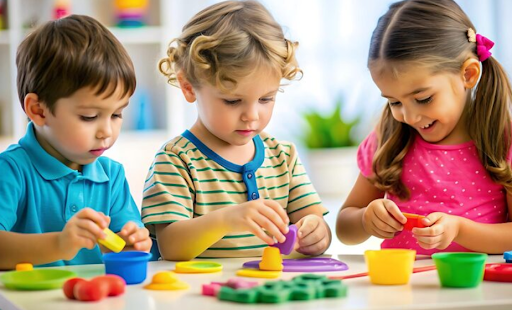
A learning environment for children becomes much more effective when it feels enjoyable instead of stressful. This is where the idea of a learning through play curriculum plays an important role. It is a teaching approach that uses games, activities, creativity, and interaction to help children understand new concepts in a natural way. Instead of only listening or memorizing, children actively participate in learning, which makes education more meaningful and fun.
Understanding the Learning Through Play Curriculum
A learning through play curriculum is designed to combine education with playful activities. It helps children learn basic skills like language, numbers, problem-solving, and social interaction through games and hands-on experiences. For example, instead of simply teaching counting through writing, teachers may use blocks, toys, or group games to explain the same concept.
This method respects the natural way children explore the world. Young learners are naturally curious, and play is their first form of learning. By using this approach, education becomes more connected to their everyday experiences.
Making Learning More Enjoyable
One of the biggest benefits of a learning through play curriculum is that it makes learning enjoyable. When children play, they do not feel pressured. They feel relaxed and open to trying new things. This reduces fear of making mistakes, which is very important in early education.
Games, storytelling, drawing, and role-playing help children stay interested in lessons. As a result, they are more willing to participate and stay focused for longer periods. Learning becomes something they look forward to rather than something they avoid.
Improving Creativity and Thinking Skills
A learning through play curriculum also helps children develop creativity and critical thinking. When children engage in imaginative play, they learn to think beyond simple answers. For example, building structures with blocks teaches them planning, balance, and problem-solving skills.
Play-based activities often do not have one fixed answer. This allows children to explore different solutions and express their ideas freely. Over time, this improves their ability to think independently and confidently.
Supporting Social and Emotional Development
Another important benefit of a learning through play curriculum is social and emotional growth. When children play together, they learn how to share, communicate, and cooperate. They understand how to work in groups and respect others’ opinions.
It also helps them manage emotions like excitement, frustration, or disappointment in a healthy way. Through guided play, teachers can help children build confidence and develop strong social skills that are useful throughout life.
Building Strong Learning Foundations
A learning through play curriculum does not only focus on fun; it also builds strong educational foundations. Early learning through play helps children understand basic concepts more clearly. Because they experience learning through activities, the knowledge stays in their memory for a longer time.
This strong foundation prepares them for more structured learning in later years. Children who enjoy learning at an early stage often continue to show interest and confidence in school.
Conclusion
A learning through play curriculum is a powerful way to make education more engaging, meaningful, and enjoyable for children. It combines learning with fun activities that support creativity, thinking skills, and emotional growth. By allowing children to learn through play, we help them build strong foundations for lifelong learning while keeping their natural curiosity alive.