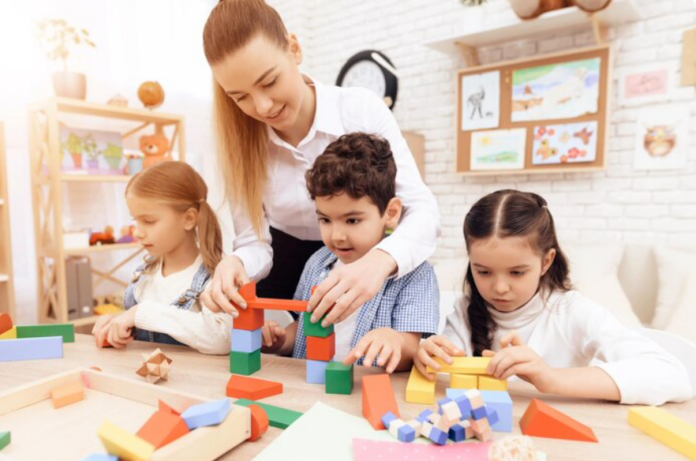
Early childhood is one of the most important stages in a child’s development. The experiences children have during these years shape how they learn, think, and interact with the world. A well-structured learning approach can make a big difference in building strong foundations. One such approach is the Montessori program, which focuses on hands-on learning, independence, and natural development. It allows children to learn at their own pace while developing essential life and academic skills in a calm and supportive environment.
What Is a Montessori Program?
A Montessori program is a child-centered approach to education that encourages learning through exploration and practical activities. Instead of traditional teaching methods where the teacher leads every lesson, children in a Montessori setting are guided to discover and learn on their own. The classroom is carefully designed with learning materials that support different stages of development. In a Montessori program, children choose activities based on their interests, which helps them stay engaged and curious while building a strong foundation for future learning.
Encouraging Independence and Confidence
One of the key benefits of a Montessori program is that it promotes independence from an early age. Children are encouraged to make their own choices, complete tasks on their own, and take responsibility for their learning. This helps them build confidence in their abilities. When children successfully complete activities without constant assistance, they feel proud and capable. Over time, this independence supports not only academic growth but also emotional strength, helping children become more self-reliant and confident individuals.
Building Strong Cognitive and Social Skills
A Montessori program also plays an important role in developing cognitive and social skills. Children engage in activities that improve their problem-solving abilities, critical thinking, and concentration. They learn how to observe, analyze, and make decisions independently. At the same time, group activities in the classroom help children develop social skills such as sharing, cooperation, and respect for others. These combined experiences create a balanced development that prepares children for both school and real-life situations.
Supporting Early Language and Math Development
Early learning in language and math is a key focus of the Montessori program. Children are introduced to letters, sounds, numbers, and counting through interactive and hands-on materials. Instead of memorization, they learn by doing, which makes concepts easier to understand and remember. This practical approach helps children build a strong foundation in reading, writing, and basic mathematics. As a result, they develop a positive attitude toward learning that continues as they grow older.
Creating a Positive Learning Environment
The environment in a Montessori program is carefully prepared to support learning and development. Classrooms are calm, organized, and filled with natural materials that encourage exploration. Children are given the freedom to move, choose activities, and learn without pressure. This positive environment reduces stress and helps children focus better on their tasks. It also nurtures creativity and curiosity, which are essential for lifelong learning and success.
Conclusion
A Montessori program provides a strong foundation for early childhood learning by focusing on independence, hands-on experiences, and natural development. It helps children grow academically, socially, and emotionally in a balanced way. By encouraging curiosity and self-confidence, this approach prepares children not only for school but also for life. Choosing a Montessori program can be a valuable step in ensuring your child builds strong early learning foundations that support long-term success.